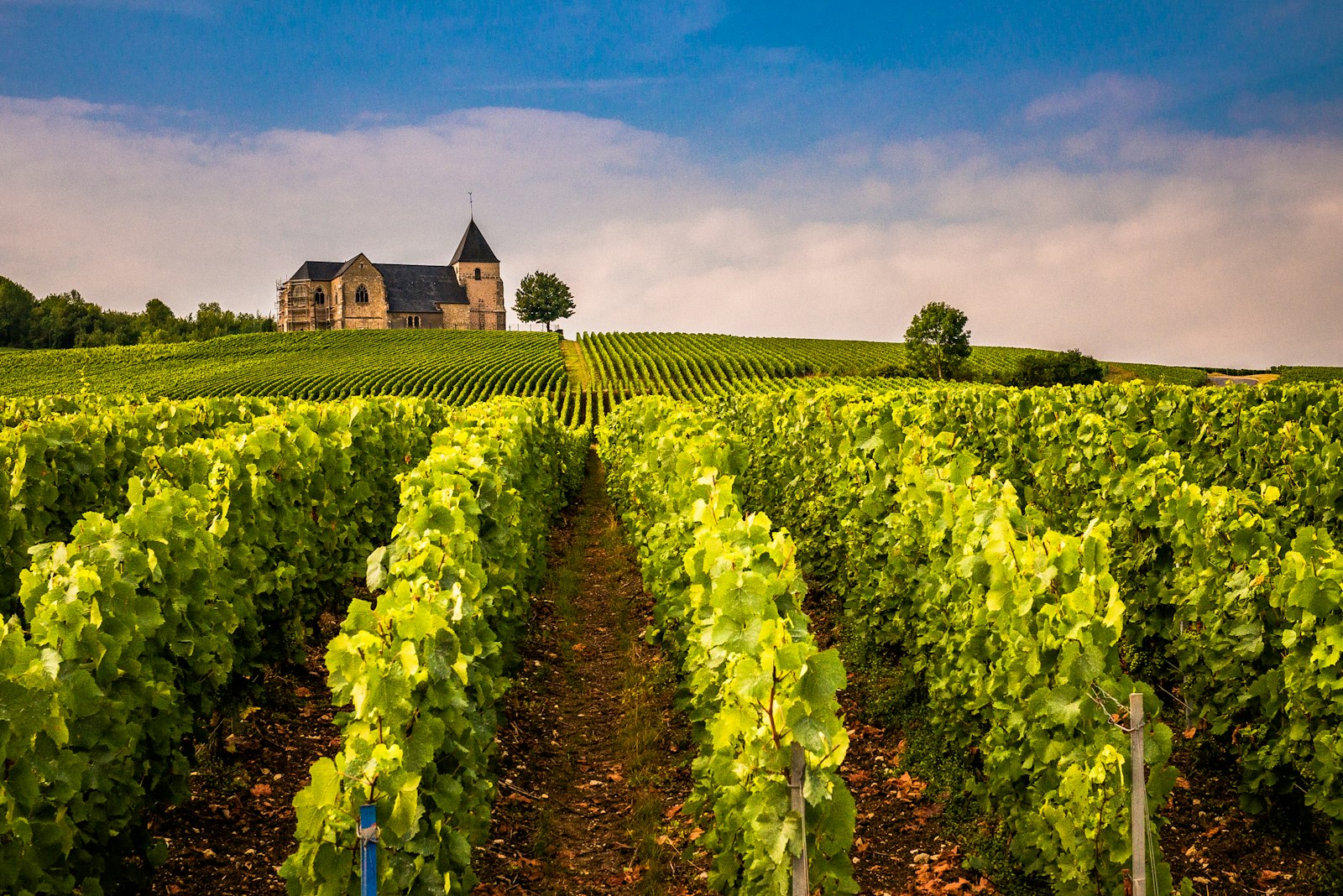
About 160 km east of Paris, the only place that can call its sparkling wine champagne.
Champagne is a wine region in north-eastern France about 160 km east of Paris. Wikipedia says it is the only area where EU law and most national laws allow the name champagne for sparkling wine. It has five districts, the Aube, the Côte des Blancs, the Côte de Sézanne, the Montagne de Reims and the Vallée de la Marne, and its main grapes are chardonnay, pinot noir and pinot meunier.
Its boundaries were legally defined in 1927, and the Comité Interprofessionnel du Vin de Champagne was formed in 1941.
Wikipedia also names still wines such as Coteaux Champenois and Rosé des Riceys, Ratafia de Champagne and Marc de Champagne.
We could not confirm an official best season or harvest dates for Champagne, so we do not give them here. Our when to go page has monthly weather for Reims.
Wikipedia says Champagne is the only area where EU law and most national laws allow the name for sparkling wine.
Wikipedia says all but seven future kings of France were crowned there, the last being Charles X in 1825.
Facts on this site come from gov.uk, Atout France, regional tourism boards, UNESCO and the operators named, each listed at the foot of the page. Check dates, prices and entry rules with the provider before you book.