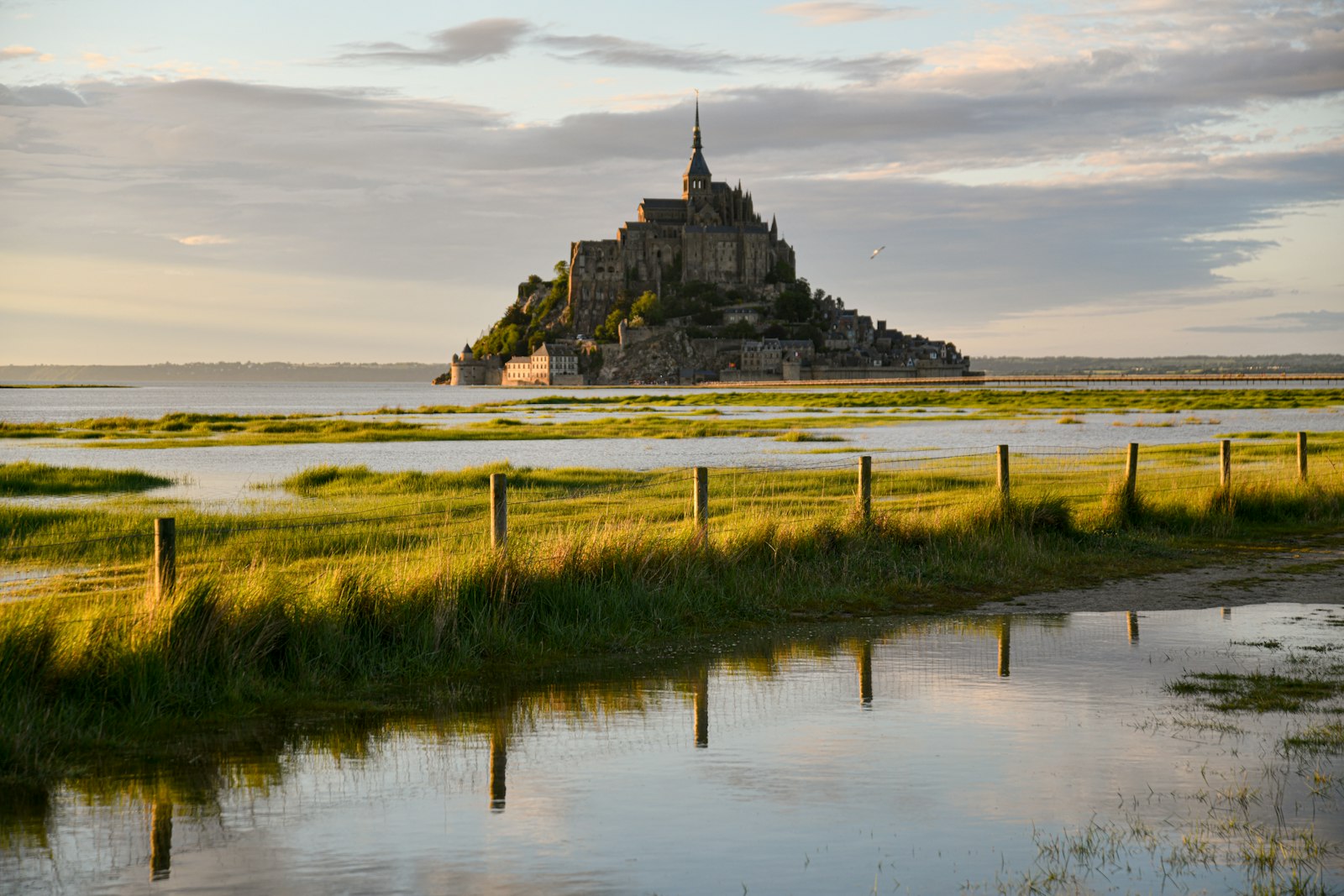
A region of castles, abbeys and coast with a thousand years of history behind it.
Normandy is a region in north-western France. Wikipedia says the duchy was formed by a treaty in 911, that William the Conqueror became King of England in 1066, and that mainland Normandy joined the French royal domain in 1204. The Normandy landings of 6 June 1944 and the Battle of Normandy are a major part of the region's story, and the D-Day beaches can be visited all year, according to Normandy Tourism.
Wikipedia names cider, calvados, Camembert and Livarot, and Claude Monet's scenes including Giverny.
Normandy Tourism's spring page says spring blooms are tentative in April and truly spectacular by May and June, and describes spring, autumn and winter as quieter. Our when to go page has monthly weather for Rouen.
No. It is a UNESCO-listed abbey island, listed in 1979 according to Wikipedia.
Normandy Tourism says the D-Day beaches can be visited year-round.
Richard the Lionheart began it in 1196, according to Wikipedia.
Facts on this site come from gov.uk, Atout France, regional tourism boards, UNESCO and the operators named, each listed at the foot of the page. Check dates, prices and entry rules with the provider before you book.