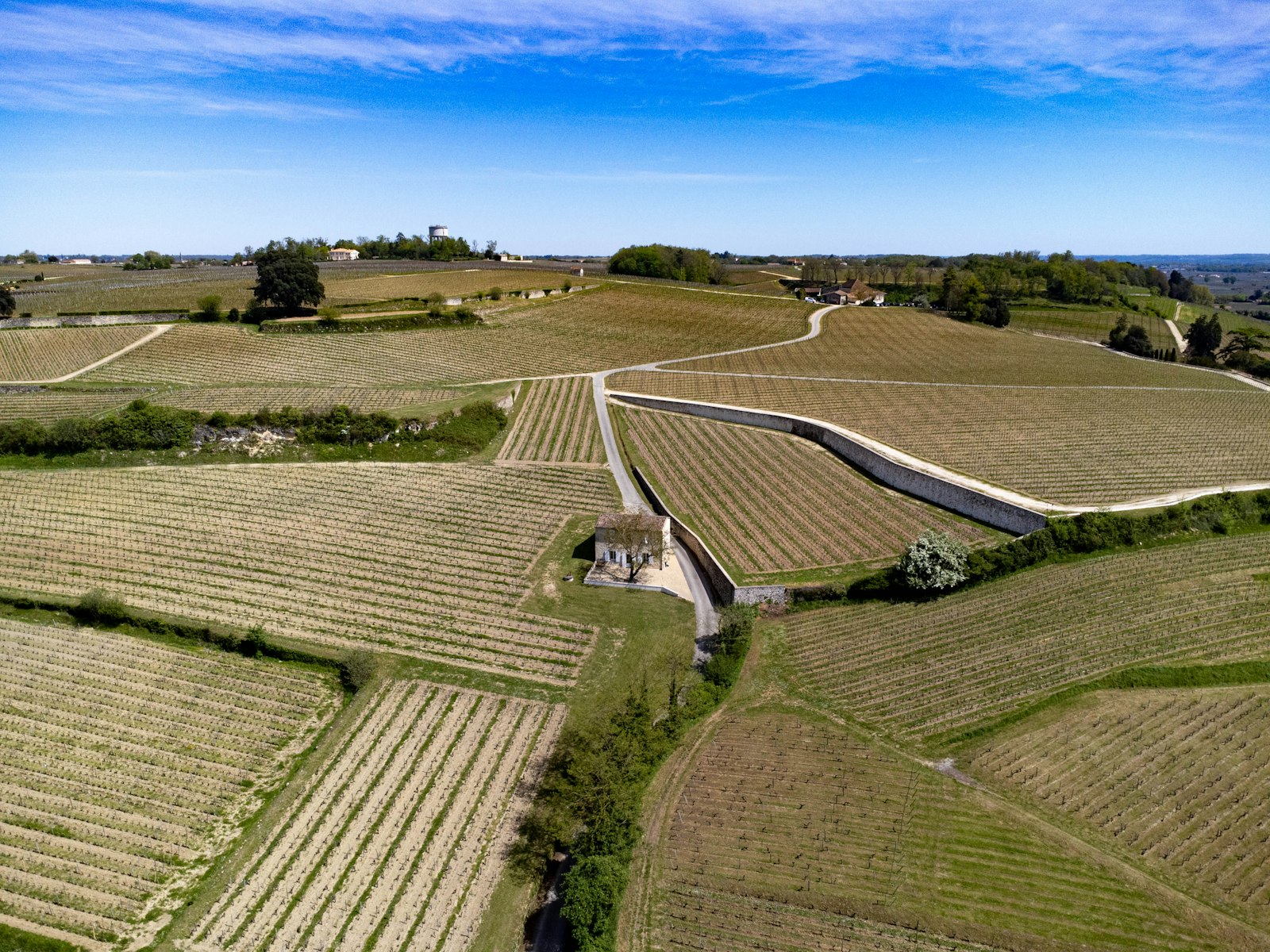
In Bordeaux a chateau is usually a wine estate. Here is how the region works and what is worth knowing before you visit.
Bordeaux is a wine region in south-west France around the city of Bordeaux. Its estates are traditionally called chateaux. Wikipedia describes the Left Bank (Médoc and Graves) as mainly Cabernet Sauvignon-based reds, the Right Bank (Libournais, Bourg and Blaye) as mainly Merlot-based reds, Sauternes and Barsac as sweet botrytised whites, and Entre-Deux-Mers as dry white.
The 1855 classification was drawn up for the Exposition Universelle de Paris at the request of Napoleon III, with the wines ranked by wine-trade brokers. It covers the red wines of the Médoc plus Château Haut-Brion, the only classified red from Graves, and a separate list for the sweet whites of Sauternes and Barsac.
Wikipedia says Pauillac holds three of the five 1855 First Growths, and that Château Mouton Rothschild was later moved from second to first growth.
The Bordeaux Tourist Office calls autumn the ideal season to discover wineries during the grape harvest, and mentions mild temperatures and porcini and truffles in bistros. It does not rank autumn best overall. Our when to go page has monthly weather for Bordeaux.
A ranking of Bordeaux wines made for the 1855 Exposition Universelle de Paris at the request of Napoleon III, by wine-trade brokers. It covers Médoc reds, Haut-Brion and the sweet whites of Sauternes and Barsac.
The Bordeaux Tourist Office says autumn is the ideal season to discover wineries during the grape harvest.
Wikipedia says UNESCO inscribed the jurisdiction of Saint-Émilion in 1999.
Facts on this site come from gov.uk, Atout France, regional tourism boards, UNESCO and the operators named, each listed at the foot of the page. Check dates, prices and entry rules with the provider before you book.